Check Sewer Availability First
Ask Port St. Lucie Utility Systems whether the parcel can connect and whether a connection requirement applies. The City’s septic to sewer program publishes a application to completion estimate of 4 to 6 weeks. That concerns sewer conversion, not septic permit approval. City program.
Provide Safe Site Access
Supply gate codes and access information. A qualified soil evaluation and complete application reduce avoidable delays. Wet season groundwater, soil and usable area affect the field and any fill or elevation needs. Coordinate clearing with applicable approvals; do not disturb protected areas to accelerate a permit.
Size the Home, Tank and Field Together
Bedrooms and building area determine residential design flow using the higher resulting demand. A three bedroom example measuring approximately 1,800 square feet has 300 gallons per day of flow and 900 gallons of minimum effective tank storage. Treatment may add tanks. Field sizing separately considers flow and soil; more storage cannot make a saturated field adequate.
Identify the Treatment Requirements
New systems serving lots of one acre or less in affected BMAP and alternative restoration areas need nutrient reducing treatment when sewer is unavailable. Specified Indian River Lagoon program areas have additional requirements. Check the exact parcel on current DEP maps rather than treating all of St. Lucie County alike. DEP guidance.
Prepare the County Application
Submit DEP 4015, scaled site and floor plans, the qualified site evaluation and applicable fee. The County checklist asks for three copies of site and floor plans and dated, signed and sealed documents when prepared by an engineer. Confirm current submission instructions. County checklist.
Choose Approved Materials and Equipment
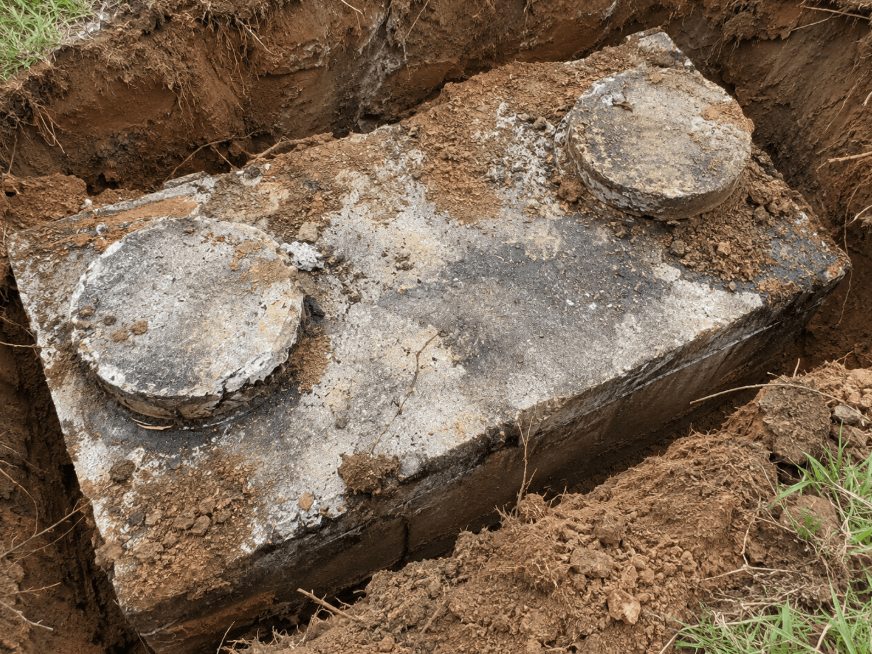
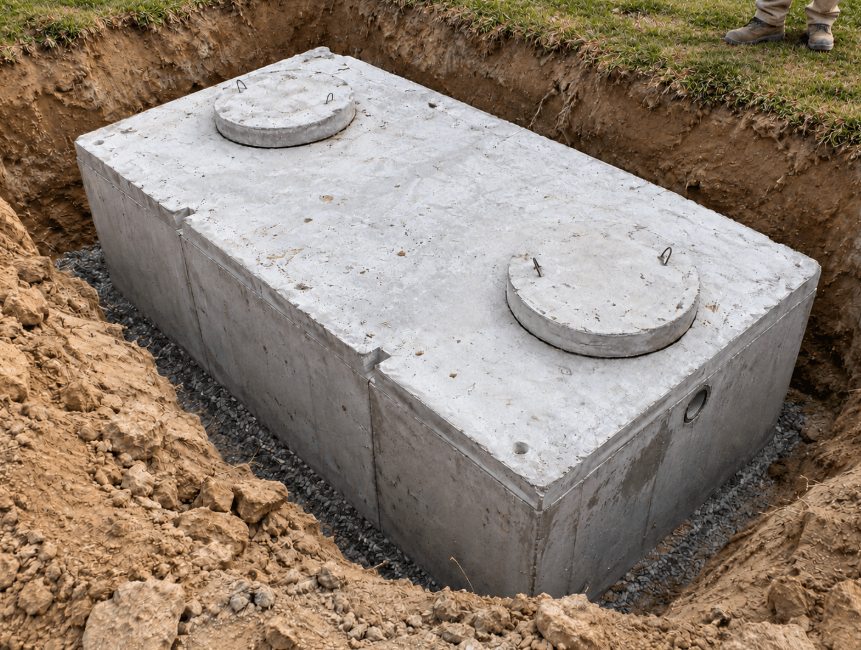
Concrete, fiberglass and polyethylene describe the shell. Aerobic units, nitrogen reducing biofilters and performance based designs describe treatment. Approved equipment, proper installation and site conditions matter. An aerator alone does not demonstrate nitrogen reduction compliance.
Separate Repair from Total Replacement
Field repair, tank only replacement and complete replacement can follow different approval pathways. Establish retained components, failure findings and whether a new system permit is required. Include applicable old system abandonment, approvals and restoration in the scope.
How Long Does Septic Permitting Take?
Use 4 to 6 business days only as an initial planning allowance after a complete septic application is submitted. This is not a published St. Lucie County approval time or a guarantee. The County guidance reviewed does not provide a standard turnaround. Missing documents, site access, design changes, nutrient reduction review and agency workload can extend the schedule. Confirm the current queue before setting a construction date.
Understand Review and Construction Stages
Florida’s general licensing framework provides an initial errors and omissions review of 30 days and ordinarily a decision period of 90 days after a complete application, unless a shorter law applies. These legal provisions have exceptions and are not a County typical completion time. Design, construction and final inspection are distinct stages. Section 120.60.
Keep Final Approval and Maintenance Records
Obtain the applicable approvals and arrange required inspections. Submitting an application does not authorize use of the system. Keep final records and follow any operating permit, maintenance contract and equipment service requirements for advanced treatment.
Read our Port St. Lucie septic sizing, materials and care guide.